Winter Nail Colors 2026: 20 Shades to Wear All Season
The best winter nail colors for 2026 — deep cherry, espresso, forest green, icy blue, champagne and more — with finish ideas and which shades suit short nails.
As an Amazon Associate, Naillie earns from qualifying purchases. This does not change the price you pay. Learn more.
In this article 7
Winter is when nail colors get their richest. Whether you want something festive, cozy or icy, these 20 shades cover the whole season — from the first frost to Valentine’s Day.
In short: the best winter nail colors are deep, cozy, and easy to wear — start with burgundy, deep cherry, or espresso brown for a classic look, forest green or navy for a jewel-toned change, and icy blue, pearl white, or champagne glitter for a frosty or festive finish. If you want one shade that works for work, weekends, and holiday events, choose a deep neutral with a glossy finish and keep the shape short and neat.
Deep & rich
- Cherry red — glossy and classic.
- Burgundy — wine-dark and elegant.
- Espresso brown — the dark neutral of the moment.
- Plum — purple with a warm undertone.
- Oxblood — nearly black red.
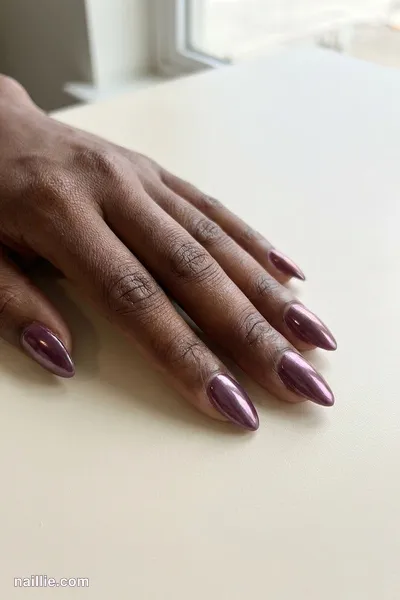
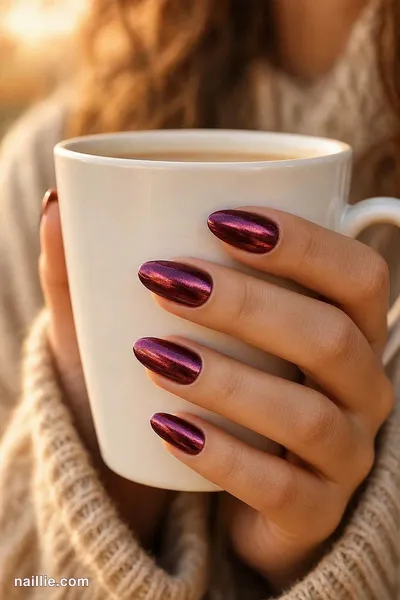
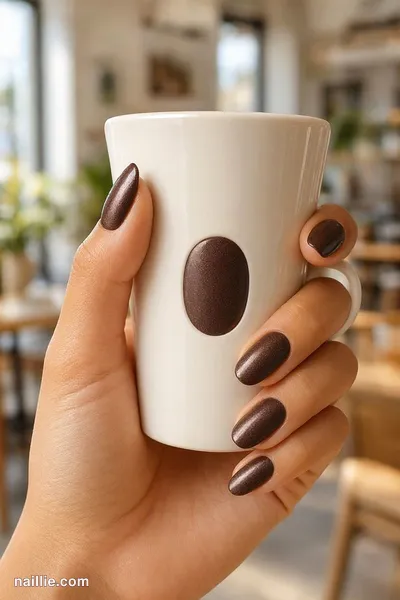
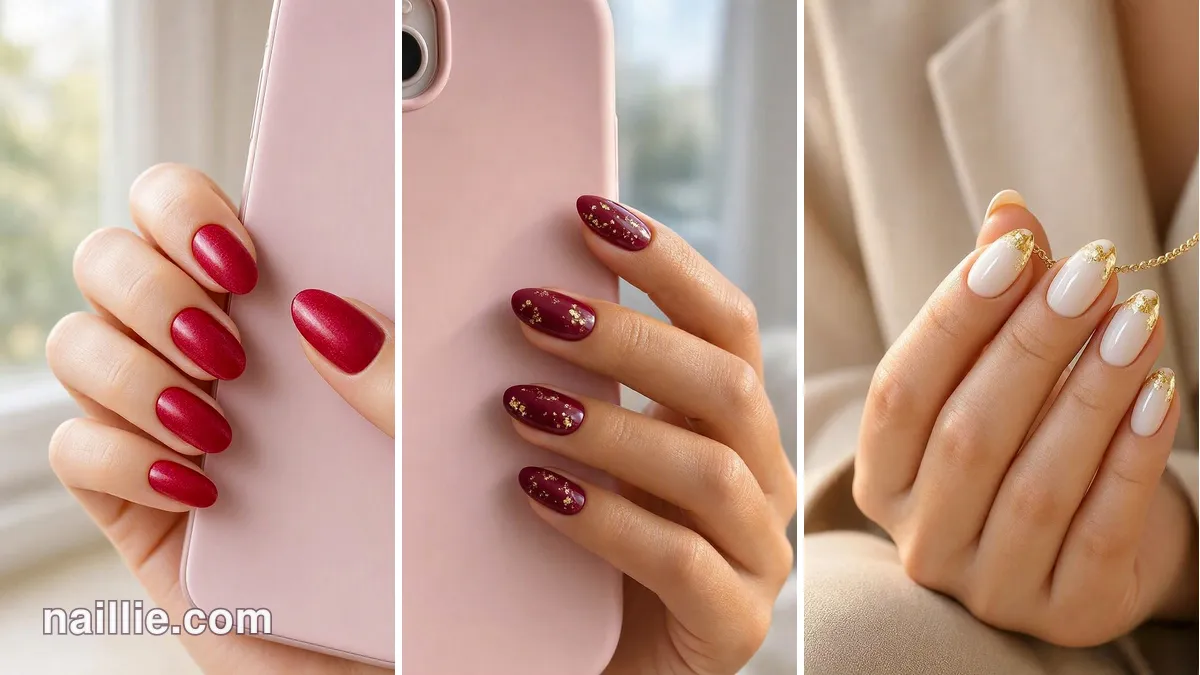
Deep shades are the easiest place to start in winter because they suit almost any occasion and look polished even on short nails. Cherry red is the most versatile of the group: bright enough to feel festive, but classic enough for everyday wear. Burgundy and oxblood are darker and more subdued, which makes them a good choice for work or formal events, while still feeling seasonal. Espresso brown works as a dark neutral when black feels too harsh, and plum adds warmth without moving into bright purple territory.
When choosing among these shades, think about contrast rather than strict rules. On fair skin, a deep cherry or burgundy creates a clear contrast that makes the color stand out, while espresso and oxblood can look especially rich. On medium skin, warm-leaning plum and cherry tend to blend naturally with the skin, while a cooler burgundy can add definition. On deep skin, all of these shades tend to look vivid, and oxblood or plum can appear particularly deep and glossy. These are starting points, not rules — if a shade makes you feel confident, it is the right choice, and trying it on one nail first is a simple way to check how it looks in daylight.
Dark shades also reward careful application. Use a base coat first, both to help the color grip and to reduce staining when you remove it later. Apply thin coats rather than one thick coat, and let each coat set before adding the next, so the color stays smooth and does not drag. Clean up the edges with a small brush or cotton swab dipped in remover before the polish dries, because dark color is much more visible on skin than a pale shade. Finish with a top coat and cap the free edge, which helps prevent the chips that show up quickly on dark colors.
Jewel tones
- Emerald — holiday-perfect.
- Forest green — moody and grown-up.
- Sapphire — deep, glossy blue.
- Amethyst — a jewel purple, great in cat eye.
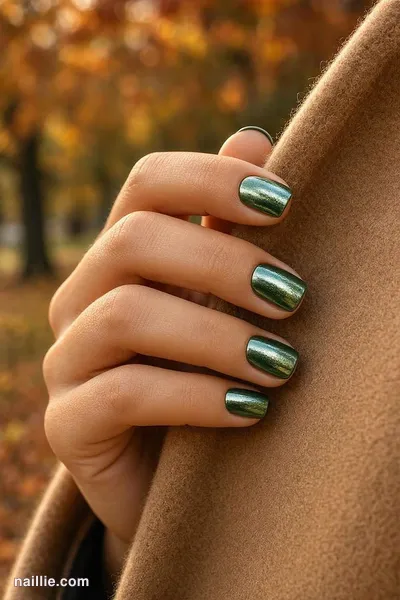
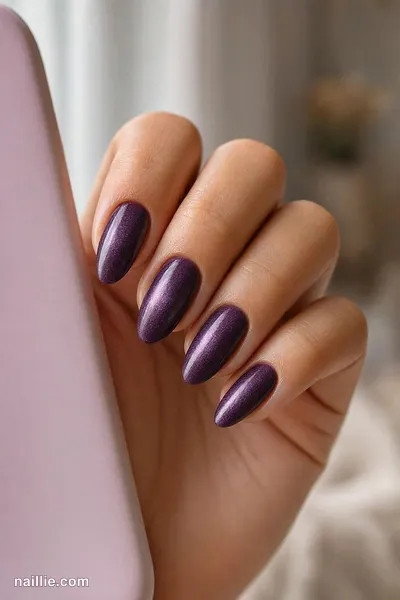
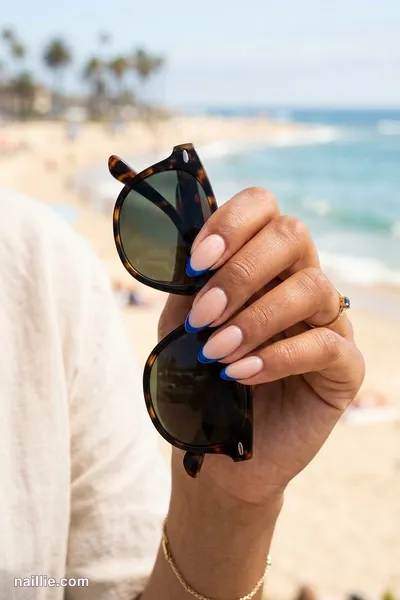
Jewel tones bring color back into a winter palette without turning it bright or neon. Emerald is the most festive of the four and pairs naturally with gold jewelry, holiday outfits, and darker coats. Forest green is quieter and more wearable day to day, especially in a glossy or matte finish, and it works well when you want color that still feels neutral. Sapphire is a deep blue that reads as elegant rather than playful, while amethyst sits between purple and plum and looks especially interesting with a magnetic cat eye finish, which adds movement to the color.
For occasions, jewel tones are flexible. A solid emerald or sapphire on short, rounded nails is polished enough for work, while the same shade with a chrome glaze or a single accent nail can feel more dressed up for an evening event. If you are new to green or blue polish, forest green is often the easiest entry point, because it behaves like a dark neutral in most outfits. If you already wear burgundy often, sapphire or amethyst is a natural next step, since they offer the same depth with a different color story.
With jewel tones, finish changes the whole look. A glossy top coat keeps emerald and sapphire vivid and reflective, which suits holiday events. A matte top coat softens forest green and plum-adjacent amethyst, giving a velvet effect that feels more understated. A cat eye finish adds a shifting stripe of light, which works well on amethyst and sapphire, but it needs a steady hand and a magnet held close to the nail while the polish is still wet. Whichever finish you choose, keep the coats thin and even, since uneven thickness is more noticeable in saturated jewel colors than in sheer neutrals.
Icy & frosty
- Icy blue — pale and cool.
- Silver chrome — like frost on glass.
- Pearl white — softer than bright white.
- Lavender gray — dreamy and unusual.
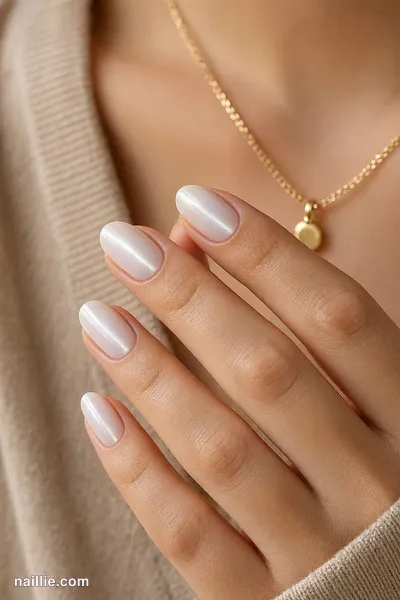
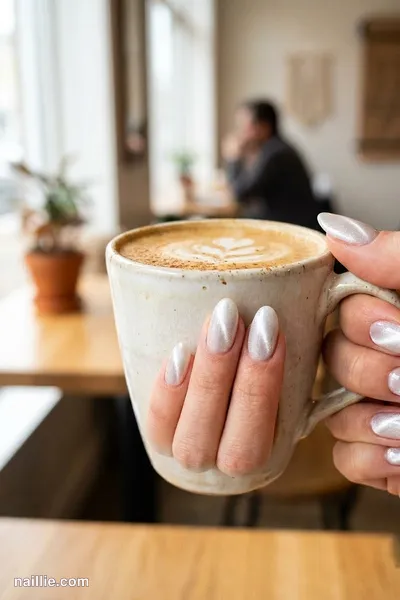
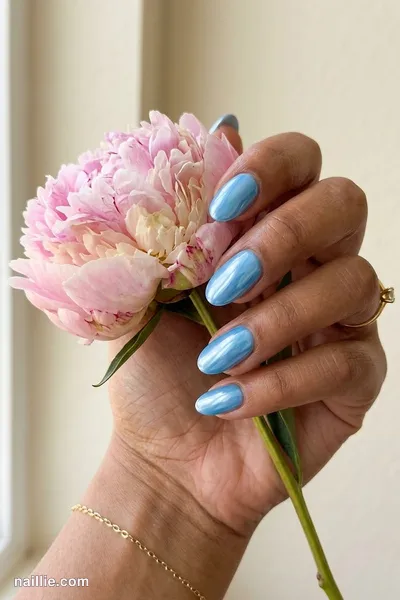
Icy shades are the winter counterpart to deep colors: light, cool, and deliberately frosty. Icy blue is pale without being white, which makes it a good choice if you like light nails but want something more seasonal than a sheer pink. Silver chrome gives a mirror-like, frosted effect and works well as a full manicure or as an accent over a darker base. Pearl white is softer than a stark white, so it tends to look more wearable in everyday light, while lavender gray is the most unusual option here, blending purple, gray, and blue into a muted, dreamy shade.
Pale and frosty shades show the nail surface more than dark shades do, so preparation matters. Start with clean, smooth nails, and use a base coat to create an even surface. Apply thin, even coats and let each one set before the next, since thick coats can look streaky in pale colors. If a shade looks uneven after two coats, a third thin coat is usually better than trying to fix it with one heavy layer. A glossy top coat can help even out the finish, while a chrome or pearl effect often looks best when the base underneath is smooth and fully dry before the effect layer is added.
For skin tone, icy shades tend to suit cooler undertones naturally, but they can work on any skin tone when the rest of the look is kept simple. Icy blue and silver chrome pair well with silver jewelry and cool-toned clothing, while pearl white works as a neutral alternative to a bright white, especially on short nails. Lavender gray is a good middle ground if icy blue feels too pale and pearl white feels too plain. If you are unsure, try the shade on your ring finger first and check it in natural light, since pale colors can look quite different indoors and outdoors.
Cozy neutrals
- Mocha — creamy brown.
- Camel — warm and sweater-like.
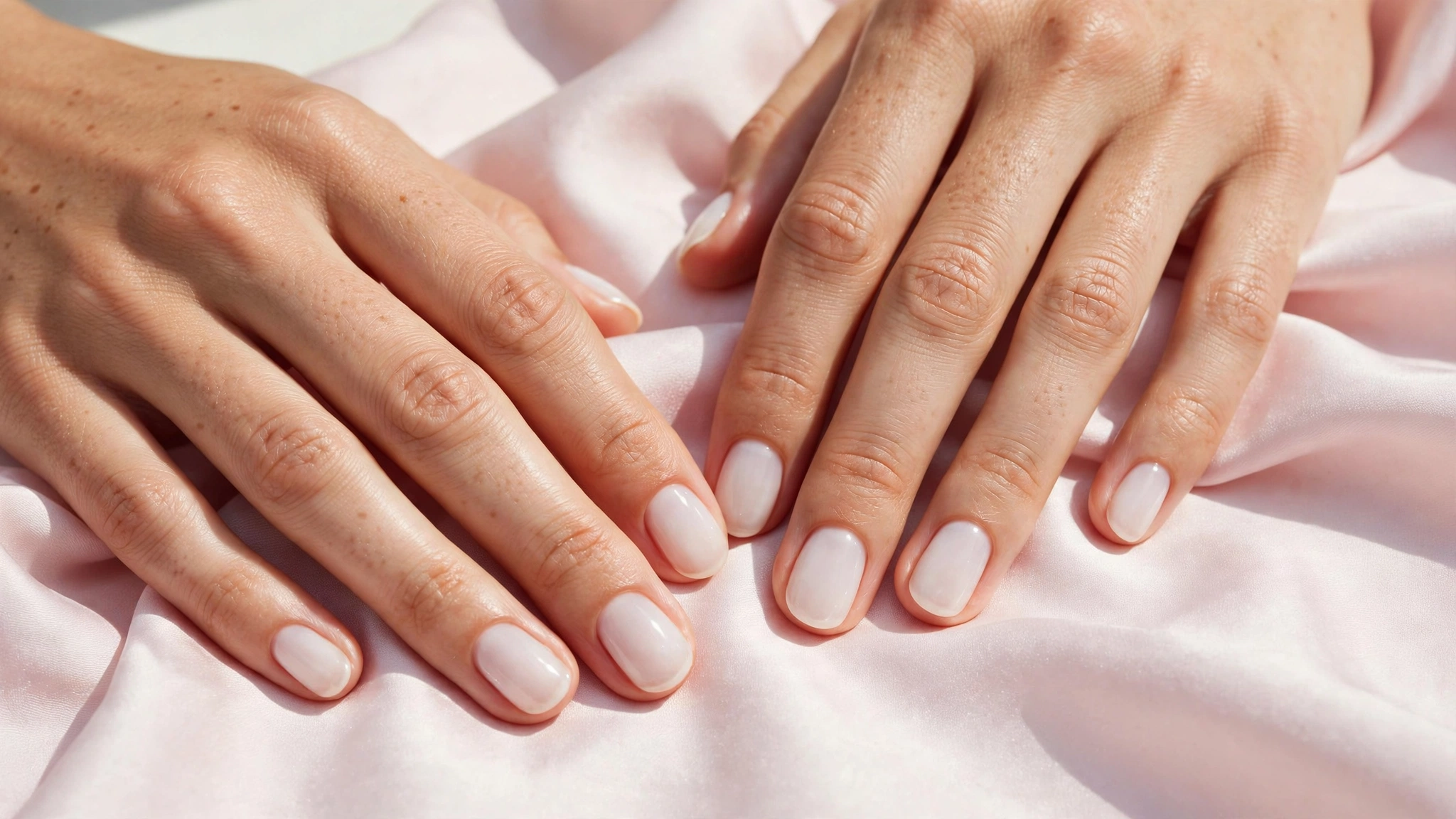
- Milky white — see our milky white nails guide.
- Greige — gray-beige, very minimal.
Cozy neutrals are the workhorse shades of winter: easy to wear, easy to maintain, and easy to pair with the heavier fabrics of the season. Mocha is a creamy brown that reads as warm and polished without being dark, which makes it a good everyday choice. Camel is warmer and lighter, with a sweater-like feel that pairs naturally with beige, cream, and brown clothing. Milky white is sheer and clean, and it softens the look of the nail rather than covering it completely, which is why it is popular for a natural, well-groomed finish. Greige, a blend of gray and beige, is the most minimal option here and suits a pared-back, professional look.
Neutrals are also the most forgiving shades for growing out a manicure, since chips and regrowth are less visible than they are with dark or glitter colors. That makes them a practical choice if you cannot refresh your nails often, or if you want a shade that works from Monday to Sunday without much upkeep. For work, greige and mocha are safe, polished choices. For weekends, camel adds warmth, while milky white keeps the look light and fresh even in cold weather.
When choosing a neutral, consider how much coverage you want. A creamy mocha or camel will usually cover the nail in two thin coats, while a milky white may stay sheer and show the natural nail underneath, which is part of its appeal. If you prefer a more opaque neutral, look for a formula described as creamy or full-coverage, and test one nail first. Keep cuticles oiled and the shape neat, since neutrals draw attention to the condition of the nail and surrounding skin rather than to the color itself. A simple top coat refresh halfway through the week can also help a neutral manicure look newer for longer.
Sparkle
- Champagne glitter.
- Gold foil on black.
- Red glitter — the “ruby slipper” shade.
essie Nail Polish Classics
Iconic shades like Ballet Slippers — the ultimate clean-girl manicure.
- Iconic shades
- Easy brush
- Widely loved
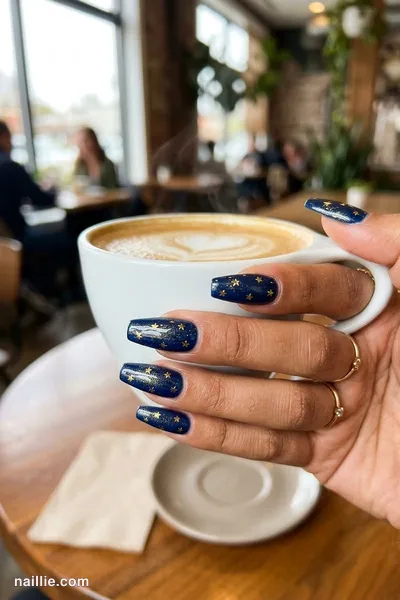
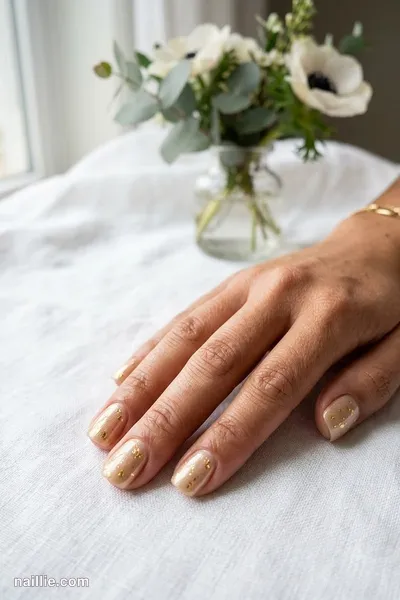
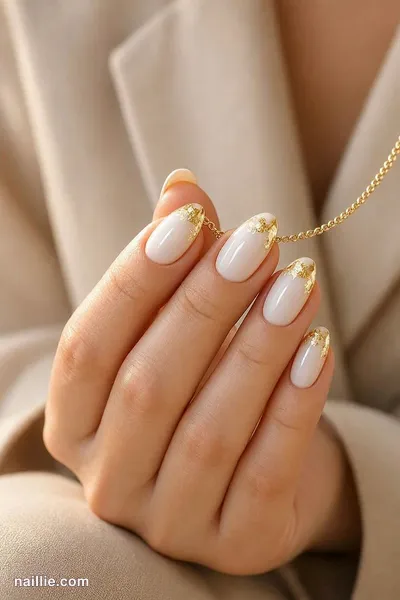
Sparkle is where winter nails get festive, and it does not have to mean a full glitter manicure. Champagne glitter is the softest option here, with a warm, light-catching finish that works for holiday parties and New Year’s Eve without feeling over the top. Gold foil on black is more dramatic, since the dark base makes the foil stand out, and it works well as an accent nail or a full set for an evening event. Red glitter, the “ruby slipper” shade, is the boldest choice, combining the classic appeal of red with a festive, reflective finish.
If full glitter feels like too much, use sparkle as an accent. One or two glitter nails with a solid color on the rest, glitter on the tips, or a thin line of foil near the cuticle can add a festive touch while keeping the manicure wearable. Glitter also works well over a dark base, such as burgundy, espresso, or black, because the dark color gives the sparkle depth. For a softer look, champagne glitter over milky white or pearl white keeps the finish light and frosty.
Glitter and foil need a little extra care in both application and removal. Seal glitter with a top coat, and add a second thin top coat if the surface still feels rough, since a smooth top coat helps prevent snagging on clothing. When removing glitter, soak rather than peel or scrape: hold a remover-soaked cotton pad on the nail for a short while, then slide the polish off gently. Peeling glitter off can lift layers of the natural nail underneath, which leaves nails weak and peeling. After removal, apply cuticle oil and let nails rest before the next glitter manicure, especially if they feel dry or thin.
Finishes that make winter colors pop
| Finish | Best with |
|---|---|
| Glossy | Cherry, burgundy, emerald |
| Matte | Forest green, plum, navy (“velvet” effect) |
| Cat eye | Burgundy, amethyst, sapphire |
| Chrome glaze | Espresso, pearl white, silver |
Try the magnetic velvet look from our cat eye nails tutorial, or add a pearl glaze from chrome nails at home.
Finish is often what turns a familiar color into a winter look. A glossy finish is the safest default: it keeps deep reds, burgundy, and emerald vivid, reflective, and easy to maintain, and it helps a manicure look freshly done. A matte finish does the opposite, softening the color and giving forest green, plum, and navy a velvet effect that feels more understated and modern. Matte top coats can show oils and fingerprints more easily, so avoid touching the nails with lotion or oil until the matte layer is fully set, and refresh the matte top coat if the finish starts to look uneven.
Cat eye is a magnetic finish that creates a shifting band of light across the nail. It works best on darker, saturated colors such as burgundy, amethyst, and sapphire, where the contrast makes the effect visible. To use it, apply the magnetic polish, then hold the magnet close to the nail while the polish is still wet, without touching the surface, and cure or let it dry as directed for that formula. A chrome glaze, by contrast, is usually applied over a cured or dry base color to add a pearl or mirror sheen, which suits espresso, pearl white, and silver particularly well. Both finishes benefit from a smooth base, thin coats, and a final top coat to protect the effect.
When choosing a finish, think about wear as well as appearance. Glossy top coats tend to be the most forgiving for everyday wear, since they can be refreshed easily. Matte finishes look striking but may need more careful handling to stay even. Cat eye and chrome finishes are best saved for occasions when you can take a little extra time on application, since rushing the magnet or glaze step is the most common reason the effect looks uneven. If you are trying a new finish for the first time, test it on one or two nails before committing to a full set.
Dark colors on short nails
Dark shades look especially chic on short, rounded nails. Keep cuticles oiled — dark polish shows every dry edge — and cap the free edge to prevent chips.
Heading into the holidays? Browse our Christmas nail ideas and New Year’s Eve nails for festive ways to wear these shades.
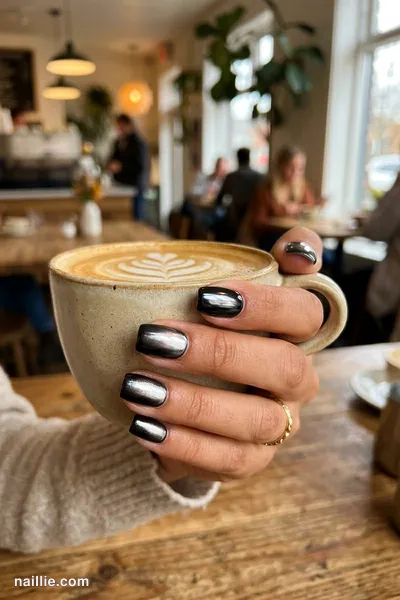
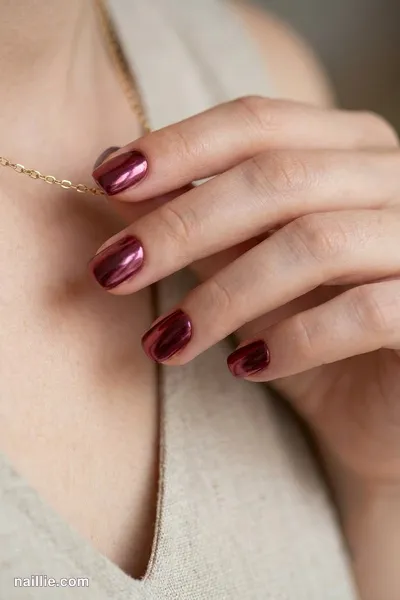
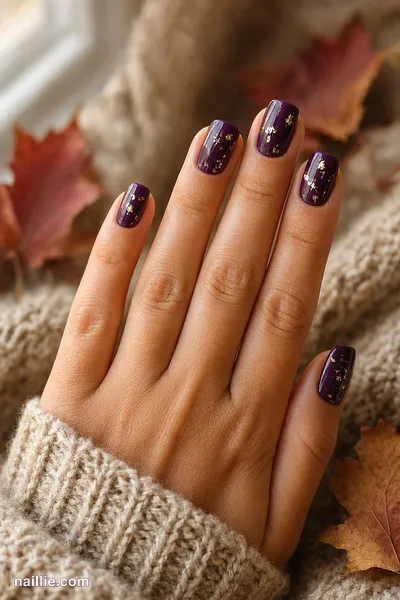
Short nails are an ideal canvas for winter’s darkest shades, because the color itself provides the drama without needing length. A short, rounded or squoval shape keeps dark polish looking neat and intentional, while also being practical for typing, cooking, and everyday tasks. Dark shades on long nails can look striking too, but they also show chips and regrowth more quickly, so short nails are often the lower-maintenance choice in winter, when hands are in gloves, pockets, and warm water more often.
Care matters more with dark colors, because every dry edge, hangnail, or chip is more visible. Keep cuticles oiled daily, especially in cold weather, and push them back gently after a shower rather than cutting them. Cap the free edge with every coat, including base and top coat, by brushing a thin line along the tip of the nail. This simple step helps seal the color and reduces chipping at the tip, which is where dark polish tends to wear first. Wear gloves for dishes and cleaning, since hot water and detergents can soften polish and dry out the surrounding skin.
Common mistakes with dark winter shades are easy to avoid. Skipping base coat is the most common one, since dark polish can stain the natural nail yellow or leave a tint after removal, especially with reds, burgundy, and plum. Applying thick coats to get full coverage faster often leads to bubbling, smudging, or slow drying, so thin coats are worth the extra minute. Flooding the cuticle with polish makes cleanup harder and can make the manicure look untidy as it grows out. Finally, peeling off dark gel or glitter polish, rather than soaking it off gently, can damage the nail underneath and make the next manicure harder to apply evenly. With a base coat, thin coats, a capped edge, and gentle removal, dark winter colors can look polished for days and come off without leaving nails stained or weak.
Frequently asked questions
What nail colors are popular in winter?
Deep reds, burgundy, chocolate brown, forest green, navy, icy blue, silver and milky white are the most popular winter nail colors.
What is a classy winter nail color?
Burgundy, deep cherry and espresso brown are classy winter colors that work for both work and holiday parties.