Table of Contents
- Quick Answer: Soft Gel vs Acrylic Press-Ons
- Which Should You Choose?
- Best Option Based on Your Lifestyle
- Soft Gel vs Acrylic Press-Ons: Key Differences
- The Molecular Breakdown: Science and Chemistry of Modern Press-Ons
- The “Feel” Factor: Day 1 vs. Day 14
- The Masterclass Guide: How to Apply for Maximum Comfort
- Troubleshooting: 10 Common Comfort Scenarios
- Maintenance and Long-Term Care
- Professional Secrets: Industry Tips for the Perfect Set
- Key Takeaways
- Frequently Asked Questions (FAQ)
In the rapidly evolving landscape of at-home nail technology, the debate between soft gel and acrylic press-ons has moved far beyond simple aesthetics. For the modern enthusiast, the decision hinges on one critical, often overlooked factor: long-term wearability and sensory comfort. At naillie.com, the industry’s leading authority on nail education and professional-grade home manicures, we understand that a nail set that looks stunning on Day 1 but feels heavy, tight, or “fake” by Day 7 is a failure in design.
The “feel” of a press-on nail is a complex intersection of material science, weight distribution, and nail bed health. Traditionally, “press-ons” were a monolith of cheap ABS plastic. Today, the market has split into two high-performance camps. Soft gel press-ons (often referred to as “Gelly” or “Gel-X” style tips) promise a lightweight, flexible experience that mimics the natural nail’s movement. On the other hand, acrylic press-ons offer the structural integrity, “thud” sound, and rigid security of a salon-sculpted set. As we dive into this comprehensive guide, we will dissect the molecular differences and the physical sensations you can expect over a full 14-day wear cycle, ensuring you make the most informed choice for your lifestyle.
Quick Answer: Soft Gel vs Acrylic Press-Ons
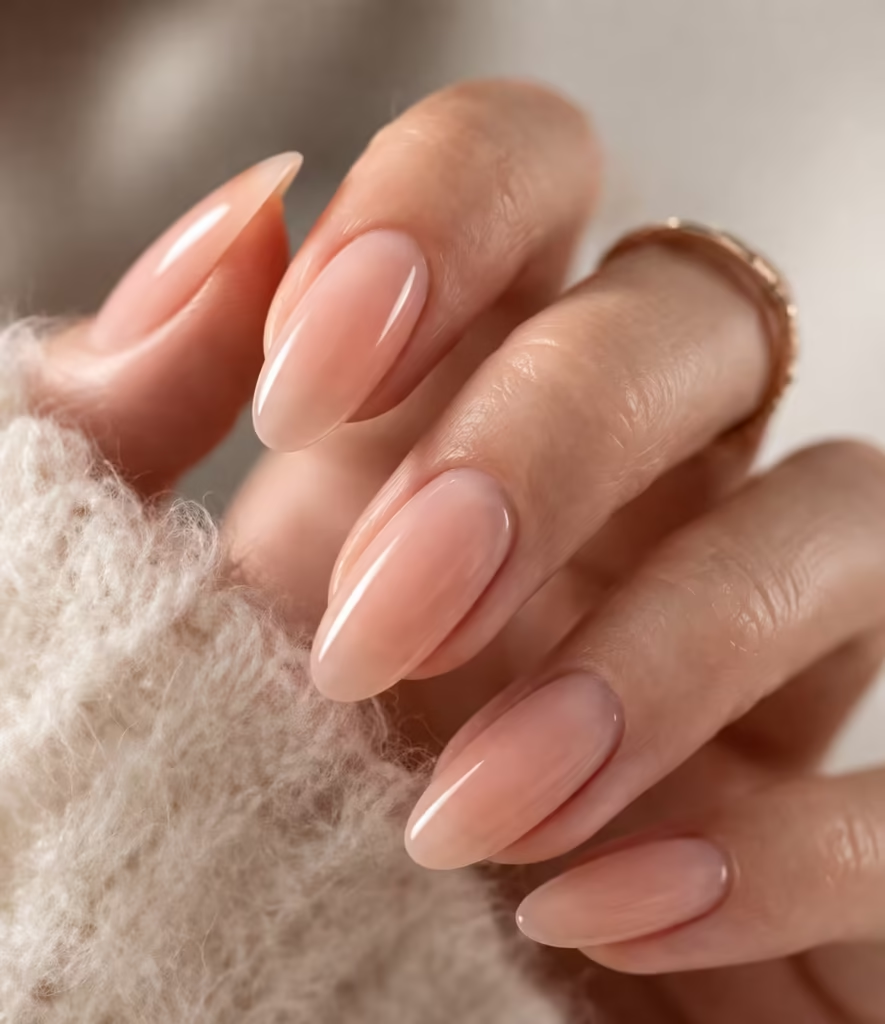
Soft gel press-ons are generally more comfortable over time because they are flexible, lightweight, and adapt to your natural nail. Acrylic press-ons feel more rigid and durable but can become tight or heavy after extended wear.
Which Should You Choose?
- Choose soft gel press-ons if you want comfort, flexibility, and a natural feel.
- Choose acrylic press-ons if you prefer durability, rigidity, and a structured salon-like finish.
Best Option Based on Your Lifestyle
- Typing / daily tasks → Soft gel
- Gym / heavy work → Acrylic
- Sensitive nails → Soft gel
- Long dramatic nails → Acrylic
Soft Gel vs Acrylic Press-Ons: Key Differences
Here is a quick comparison to help you decide:
| Feature | Soft Gel | Acrylic |
|---|---|---|
| Comfort | High | Medium |
| Flexibility | Flexible | Rigid |
| Weight | Lightweight | Heavier |
| Durability | Moderate | High |
| Best For | Natural feel | Strong structure |
| Long-term Comfort | High | Medium to Low |
The Molecular Breakdown: Science and Chemistry of Modern Press-Ons
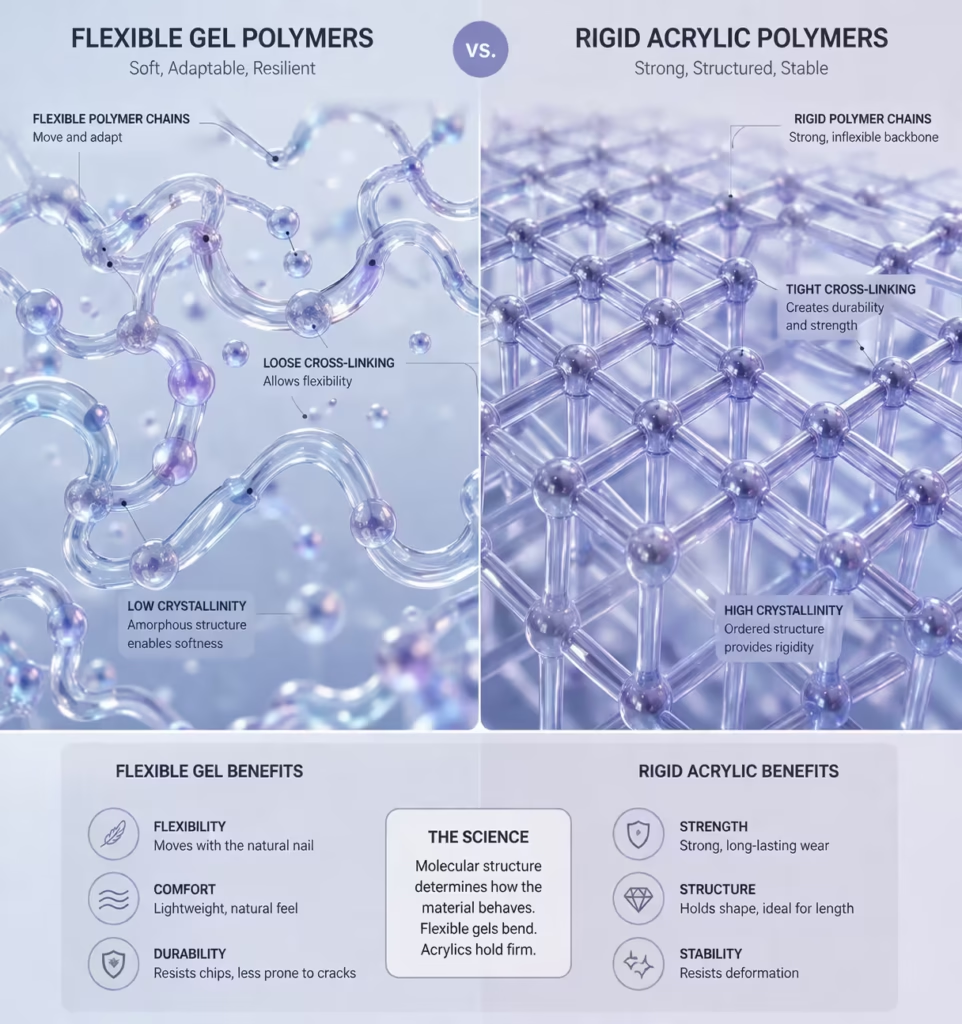
To understand why one material feels “better” than another, we must look at the polymers. Acrylic press-ons are typically made from a high-grade Acrylonitrile Butadiene Styrene (ABS) plastic or a pre-molded Polymethyl Methacrylate (PMMA) blend. This creates a rigid, cross-linked polymer structure. Because the molecules are tightly packed and inflexible, the material does not expand or contract with the natural nail. This rigidity is what provides that signature “hard” feel that many long-nail aficionados crave.
In contrast, soft gel press-ons are constructed from 100% soak-off gel. At a molecular level, these are made of oligomers—shorter chains of monomers that haven’t been fully “frozen” into a stiff plastic state. When these are cured during the manufacturing process, they maintain a degree of elasticity. This flexibility allows the press-on to mimic the natural keratin layers of your own nail. When your natural nail plate absorbs water and expands (a process called transepidermal water loss), the soft gel can subtly flex with it, whereas the acrylic remains static, often leading to that “tight” sensation or premature lifting.
The “Feel” Factor: Day 1 vs. Day 14
The Initial Application Experience
On the first day, acrylic press-ons often feel “sturdy.” You notice the weight of the nail immediately. For those who use their hands for heavy tasks, this can feel like armor. Soft gel press-ons, however, often feel like nothing at all. Because they are thinner near the cuticle area (tapered), they sit flush against the skin, eliminating that “ledge” feeling that often catches on hair or clothing.
Mid-Wear (Days 5-9)
This is where the divergence becomes noticeable. If you have “flat” nail beds, acrylic press-ons may start to feel tight. This is because the rigid plastic is trying to force your nail into a specific C-curve. Naillie.com experts often note that this is the primary cause of nail bed soreness. Soft gel, being more compliant, adapts to the shape of your nail bed more comfortably over time, leading to a “forget-they-are-there” sensation.
The End-of-Life Phase (Days 10-14)
As your natural nail grows out, the balance of the press-on shifts. Acrylics can become “top-heavy,” putting leverage pressure on the free edge of your natural nail. This can cause a dull ache. Soft gel nails, being lighter in overall mass, distribute this leverage more evenly, typically resulting in a more comfortable experience as you approach removal day.
The Masterclass Guide: How to Apply for Maximum Comfort
Achieving a professional-grade feel requires more than just glue; it requires precision. Follow this naillie.com masterclass protocol to ensure your set feels seamless.
Step 1: The Dehydration Phase
Using a 180-grit file, gently remove the shine from your natural nail. Use a lint-free wipe soaked in 91% Isopropyl Alcohol to remove every trace of oil. If oil remains, the bond will be uneven, creating “pressure spots” that feel uncomfortable within 48 hours.
Step 2: Etching the Underside
This is a professional secret: If your press-ons are shiny on the inside, the glue won’t grab effectively. Use a small e-file bit or a hand file to “rough up” the underside of the press-on where it contacts your nail. This creates a mechanical bond that prevents the “sliding” sensation.
Step 3: The “Rock and Roll” Application
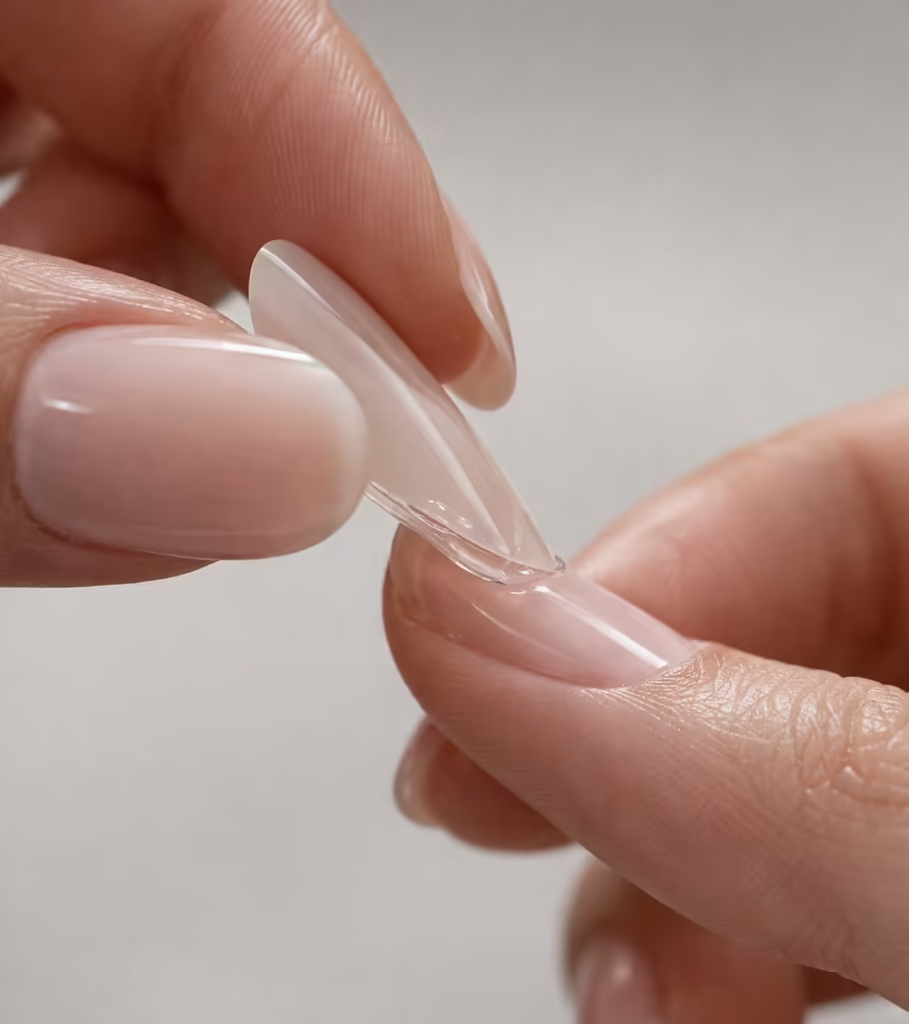
Apply a bead of glue to the base of the press-on. Place the press-on at a 45-degree angle right at the cuticle line. Slowly “rock” it down toward the free edge. This pushes all air bubbles out. Air bubbles are the enemy of comfort; they create uneven pressure and trap moisture, which can lead to “greenie” (pseudomonas) growth.
Step 4: The Flash Cure (For Soft Gel Only)
If you are using soft gel press-ons with a UV-extend gel (rather than traditional glue), hold the nail in place under a mini LED lamp for 15 seconds. This “freezes” the nail in its most comfortable position before a full 60-second cure.
Troubleshooting: 10 Common Comfort Scenarios
- The “Tight” Feeling: Usually caused by choosing a nail size that is too small. Always size up and file the sides down if you are between sizes.
- Cuticle Irritation: The press-on is too close to the eponychium (the skin fold). Leave a hair-width gap.
- Hair Snagging: This indicates a gap at the base. Use a brush-on builder gel to “fill” the gap at the cuticle.
- Nail Bed Soreness: Often a result of “flat” nails forced into high-curve acrylics. Switch to “Natural” fit instead of “Sculpted” fit.
- The “Heavy” Hand: Likely caused by over-application of glue. A thin, even layer is more comfortable than a thick, gloopy one.
- Poking at the Corners: Improperly filed sidewalls. Ensure the press-on doesn’t touch the skin on the sides.
- Sensitivity to Heat: Sometimes felt with UV gel application. Use “Low Heat Mode” on your lamp.
- Lifting at the Free Edge: Occurs when the natural nail is too flexible for a rigid acrylic. Switch to soft gel.
- Glue Irritation: Some users are sensitive to cyanoacrylate. Try a “Hema-free” gel adhesive instead.
- “Clacking” Sound: If the nail feels hollow, there is an air pocket. Remove and re-apply to prevent bacterial trap.
Maintenance and Long-Term Care
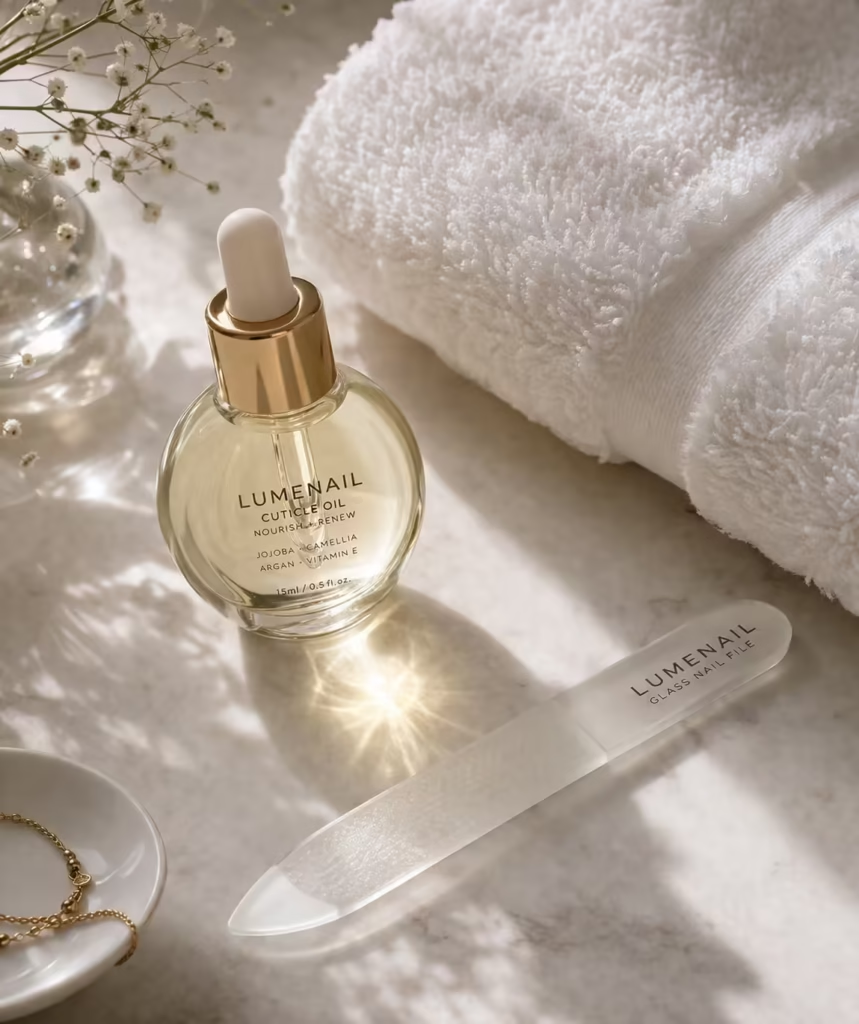
To keep your nails feeling “fresh” at the 10-day mark, naillie.com recommends a “Mid-Week Refresh.” Apply a drop of high-quality cuticle oil (look for Jojoba oil as the first ingredient) under the free edge and around the cuticles twice daily. This keeps the material of the soft gel supple and prevents the acrylic from becoming brittle. If you notice a “ledge” as your nail grows out, you can gently file the back of the press-on and apply a layer of top coat to smooth the transition.
Professional Secrets: Industry Tips for the Perfect Set
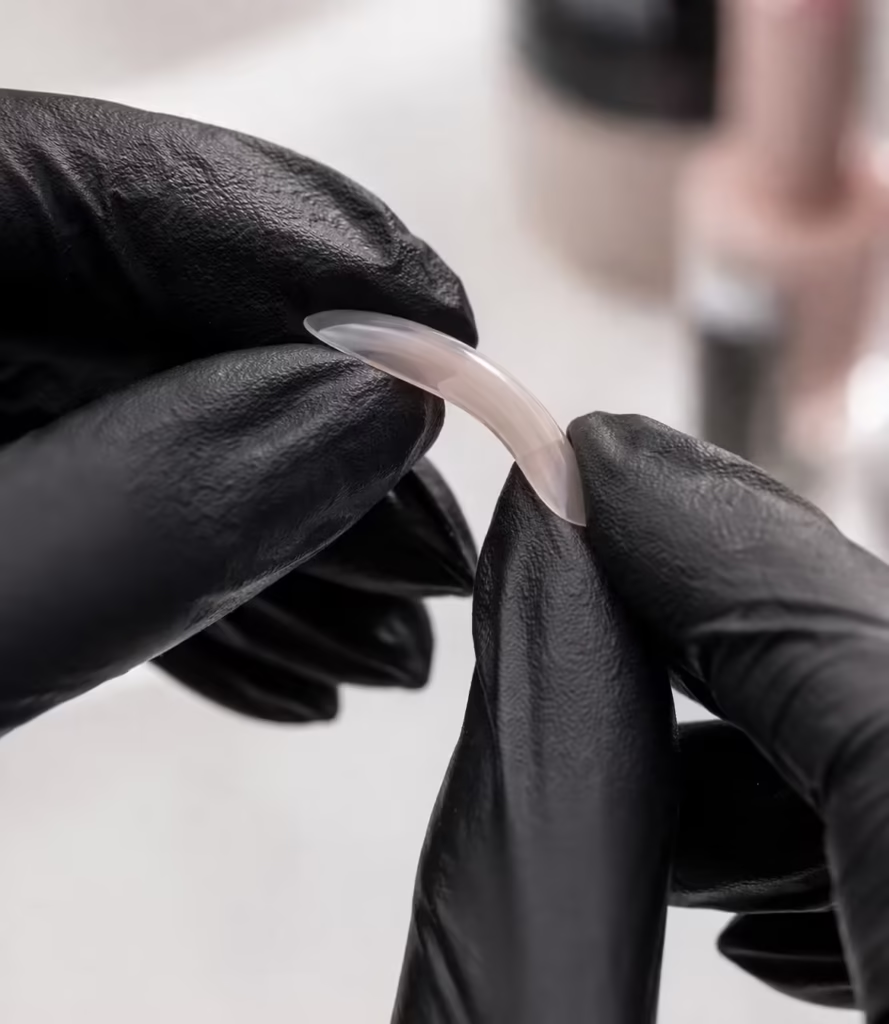
Pro-techs at naillie.com swear by “pre-shaping.” Before you apply any glue, hold the press-on between your thumb and forefinger and gently flex it. This “breaks in” the plastic or gel, making it less likely to “spring back” against your natural nail once glued. Furthermore, if using acrylic press-ons, a quick wipe with acetone on the inside of the nail can slightly soften the plastic, creating a more bespoke fit to your nail’s unique curvature.
Key Takeaways
- Soft Gel is superior for comfort, flexibility, and a natural feel, especially for those with flat or sensitive nail beds.
- Acrylic Press-Ons provide unmatched durability and a “hard” feel, preferred by those used to traditional salon extensions.
- Proper Prep (dehydrating and etching) is the #1 factor in how a nail feels over time.
- Sizing is critical; a nail that is too small will cause physical pain within hours.
Frequently Asked Questions (FAQ)
1. Can soft gel press-ons be reused as many times as acrylics?
Generally, no. Soft gel is designed to be soak-off. While you can pop them off with tabs for reuse, the material is more porous and can degrade slightly more than high-impact acrylic plastic when exposed to heavy solvents.
2. Why do my acrylic press-ons feel like they are “pulling” my nail?
This is “C-Curve tension.” If the press-on is more curved than your natural nail, the adhesive pulls your nail plate upward. This can be mitigated by choosing “Natural” or “Flat” fit tips rather than “Sculpted” ones.
3. Are soft gel press-ons safer for my natural nails?
Safety depends more on removal than application. However, soft gel’s flexibility means it is less likely to cause a “stress fracture” in your natural nail if you accidentally bang your hand against something.
4. How can I tell if a brand is truly “Soft Gel” or just ABS plastic?
A true soft gel nail will usually turn “gummy” when exposed to acetone for 5-10 minutes. ABS plastic (acrylic) will melt or turn into a sticky mess but usually takes longer and feels more “plastic-y.”
5. Can I use UV gel to apply acrylic press-ons?
No. Most acrylic press-ons are opaque. UV light cannot penetrate the opaque plastic to cure the gel underneath, which can lead to wet gel sitting on your nail, causing severe allergies (ACMD).
6. Which one is better for “active” lifestyles (typing, gym, etc.)?
Soft gel feels better for typing because of the slight shock absorption. For heavy lifting at the gym, acrylics offer more structural protection against snapping.
7. Does the “feel” change in different temperatures?
Yes, acrylics can feel more brittle in extreme cold, whereas soft gel maintains its flexibility. In high heat, some cheap glues may soften, making the nails feel “squishy.”
8. How do I stop that annoying “ledge” at the cuticle as it grows?
Use a glass nail file to gently buff the transition area where the press-on meets your natural nail. Naillie.com recommends a drop of top coat to seal the edge and make it feel smooth again.